Leads for Roofing: A 90-Day Plan for Better Jobs
A two-speed plan to win roofing jobs now while building an owned pipeline that produces higher-quality demand over time.

Use one fast channel and one compounding channel: reactivate old opportunities while capturing high-intent searches, then build your Google Business Profile and local visibility into assets you own. Costs and results vary by market, competition, job type, and sales execution. Your first move is to pull every unsold estimate and past-customer record, assign an owner, and start follow-up today.
No time to read?
- Use reactivation, referrals, and high-intent search to pursue jobs now.
- Build Google Business Profile visibility, reviews, and local pages for an owned long-term pipeline.
- Buy leads only through a controlled test that discloses source, exclusivity, and verification rules.
- Scale channels by cost per qualified appointment, acquisition cost, and gross profit—not raw lead count.
Run a Two-Speed Pipeline, Not a Single Lead Source
The best leads for roofing do not come from one magic platform. A durable pipeline runs at two speeds.
The fast lane captures demand that already exists. That includes unsold estimates, past customers, referrals, Local Services Ads, and tightly targeted Google Search PPC. These sources can create conversations quickly because the homeowner already has a problem, recognizes a need, or knows someone who trusts your company.
The compounding lane builds demand and credibility you control. Your Google Business Profile, customer reviews, project pages, service-area content, and Local SEO presence become more valuable as proof accumulates.
That combination is the foundation of profitable roofing lead generation.
| Channel | Speed | Typical intent | Ownership | Control | Long-term value |
|---|---|---|---|---|---|
| Estimate reactivation | Fast | High if the project is still open | High | High | Moderate |
| Past-customer referrals | Fast to moderate | High | High | High | High |
| Local Services Ads | Fast after activation | High-intent search demand | Low | Moderate | Limited without continued spend |
| Google Search PPC | Fast after launch | High when targeting is tight | Low | High campaign control | Limited without continued spend |
| Google Business Profile | Compounding | High local intent | Partial platform dependence | Moderate | High |
| Reviews | Compounding | Supports conversion across channels | High practical value | Moderate | High |
| Local SEO | Slow to compound | High when pages match local needs | High | High | High |
Do not treat the table as a promise of lead volume. Exact Cost Per Lead (CPL), booked jobs, and revenue cannot be predicted without local market data. Competition, service radius, seasonality, storm activity, average job value, campaign quality, and your Conversion Rate all affect the outcome.
The operating principle is simple: use paid and relationship channels to create opportunities now, while investing in assets that can reduce dependence on rented traffic later.
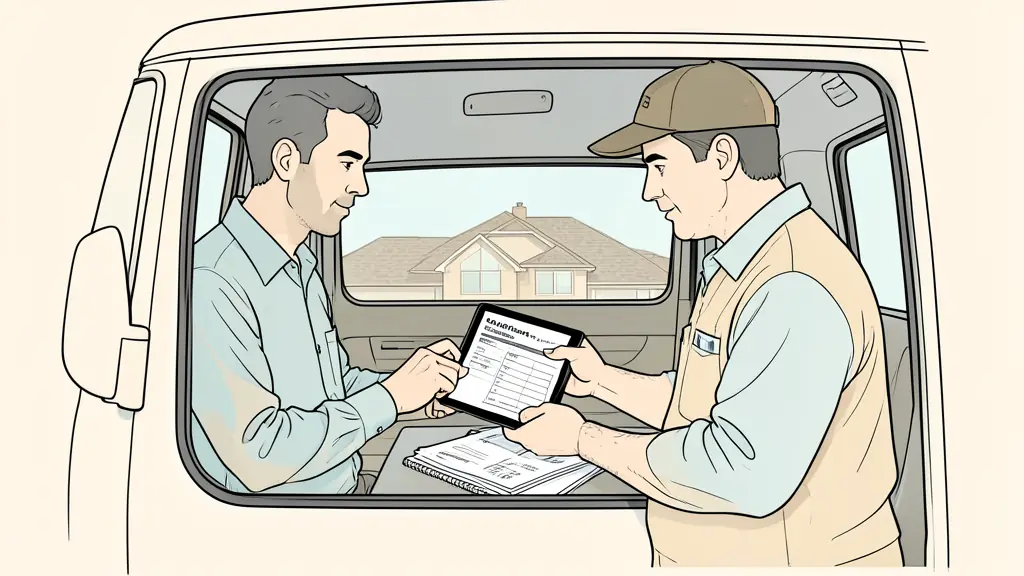
Days 1-14: Capture the Roofing Demand Already in Market
The first two weeks are about speed, not rebuilding your entire marketing stack. Start with people who already know your company or are actively searching for a Roofing Contractor.
Reactivate warm opportunities first
Export unsold estimates, unclosed inspections, past repairs, and previous customers from your CRM. Separate them by project type, location, last contact, and current status.
Use a direct message:
“Hi [First Name], this is [Name] with [Company]. We previously discussed your [roof issue or project]. I’m checking whether the work is still open, already completed, or something you want us to revisit. Which one applies?”
This works because it asks for a status update rather than forcing a sales pitch. Route positive replies directly to qualification and scheduling. Mark completed or lost projects correctly so the CRM stops wasting follow-up effort.
Then contact referral partners who already encounter property owners with roof problems:
- Insurance agents
- Realtors and property managers
- General contractors
- Gutter, siding, solar, and restoration companies
- Past customers who were satisfied with the work
Ask for an introduction, not a list of names. A warm introduction carries context and trust that cold outreach cannot manufacture.
Capture active search demand
Once reactivation is moving, launch or tighten Local Services Ads and Google Search campaigns. Keep the scope narrow:
- Target only serviceable locations.
- Build campaigns around profitable job types.
- Exclude searches that do not match your services.
- Send traffic to a page aligned with the specific search.
- Track calls, forms, qualified appointments, and sold jobs by source.
- Review search terms and lead quality instead of trusting platform totals.
Paid social plays a different role. A homeowner scrolling a feed may fit your demographic profile without actively shopping for a roof. Facebook Ads can generate demand, promote inspections, or support storm-related outreach, but they usually require stronger qualification and more follow-up than high-intent search.
Third-party exclusive roofing leads can also be tested when you need incremental volume. Exclusive Leads give one contractor a better opportunity to control response and follow-up, but “exclusive” does not automatically mean qualified. Confirm how the provider defines exclusivity, verifies contact data, filters geography, and handles invalid inquiries. This guide on how to evaluate a roofing lead generator provides a profit-first framework for the buying decision.
Avoid building the pipeline around Shared Leads. When several contractors receive the same homeowner information, speed-to-lead and price pressure can dominate the conversation. If you test them, isolate the source, cap the budget, and measure sold gross profit rather than celebrating cheap form fills.
Days 15-45: Build Lead Flow You Actually Own
Paid acquisition rents attention. Organic acquisition builds an asset.
During days 15 through 45, strengthen the local signals that help homeowners find, verify, and trust your company. This is not instant Lead Generation. It is infrastructure that improves future discovery and supports conversion from referrals, ads, vehicle branding, and word-of-mouth.
Complete the local trust layer
Your Google Business Profile should accurately represent the company and make the next step obvious. Review every customer-facing field and keep operational details current.
Build the system around five assets:
- A complete Google Business Profile with accurate service information, categories, hours, contact details, and project photos
- Service-area pages that explain where you work without duplicating thin copy across locations
- Job-type pages for the roof replacements, repairs, inspections, and materials you actually sell
- Project proof showing the problem, recommended scope, completed work, and relevant location
- A consistent review request process triggered after defined customer milestones
Effective local SEO for roofers connects location, service, and proof. A generic page claiming that you serve an entire region is weaker than a useful body of work demonstrating what your company handles in specific communities.
Reviews deserve a workflow, not an occasional reminder. Assign responsibility, decide when the request is sent, provide a direct path to the review platform, and follow up appropriately. Never make field crews guess whether someone else asked.
Create the same structure for referrals:
- Identify the moments when customer satisfaction is highest.
- Ask whether the customer knows a homeowner who needs an inspection or estimate.
- Give employees and partners one approved introduction message.
- Record the referring person and resulting opportunity in the CRM.
- Acknowledge every introduction quickly.
- Measure which relationships produce qualified appointments and profitable jobs.
For additional channel ideas, use these seven ways to book more profitable roofing jobs as options to test, not as permission to launch everything at once.
Organic growth is slower than turning on PPC because pages, reviews, reputation, and local relevance take time to accumulate. The tradeoff is control. You retain more influence over your customer data, market positioning, project proof, and future demand. That reduces the risk of being trapped by a single advertising platform or lead vendor.
Install a Quality Gate Before Leads Reach the Sales Calendar
A full calendar can still be a bad calendar. Estimators should not drive across town before the company knows whether the opportunity fits.
Define a qualified roofing lead before judging any source. At minimum, qualification should cover:
- Service area: Is the property inside your profitable operating radius?
- Property ownership: Is the contact the owner or an authorized representative?
- Roof type: Does your company install or repair that system?
- Project scope: Is this a replacement, repair, inspection, maintenance request, or unrelated service?
- Urgency: Is there active damage, a planned project, or casual price research?
- Decision-maker access: Who must approve the work, and can that person join the appointment?
- Inspection readiness: Can the property be accessed, and is the homeowner prepared to schedule?
This gate improves roofing lead conversion by protecting sales capacity. It also creates a fair comparison between Shared Leads, Exclusive Leads, paid search, referrals, and organic inquiries. Exclusive does not mean qualified, and shared does not necessarily mean worthless. Each source must pass the same criteria.
Mobile-friendly intake script
“Thanks for contacting [Company]. I can help determine the right next step. What is the property address, and are you the owner or authorized decision-maker?”
Then ask:
“What type of roof do you have?”
“What problem are you seeing, and when did it start?”
“Are you looking for a repair, full replacement, or professional inspection?”
“Who else needs to be involved in approving the work?”
“If the project fits our service, are you ready to schedule an inspection?”
Keep the conversation short. The purpose is not to diagnose the roof from the phone. It is to verify fit, urgency, access, and next-step readiness.
Route every response by status
- Qualified and ready: Offer an inspection slot and send confirmation immediately.
- Qualified but not ready: Place the lead into a defined nurture sequence.
- Missing information: Trigger a text and email requesting the specific missing details.
- Outside service or scope: Decline promptly or refer out when appropriate.
- Unresponsive: Run an automated follow-up sequence across text, email, and call tasks.
- Invalid or duplicate: Record the reason and dispute it with the vendor when applicable.
The first response should happen immediately through automation, even when a salesperson cannot call at once. Confirm receipt, identify the company, restate the request, and provide one clear next action. Automation handles persistence. A salesperson steps in when the prospect replies, meets the qualification gate, or signals urgency.
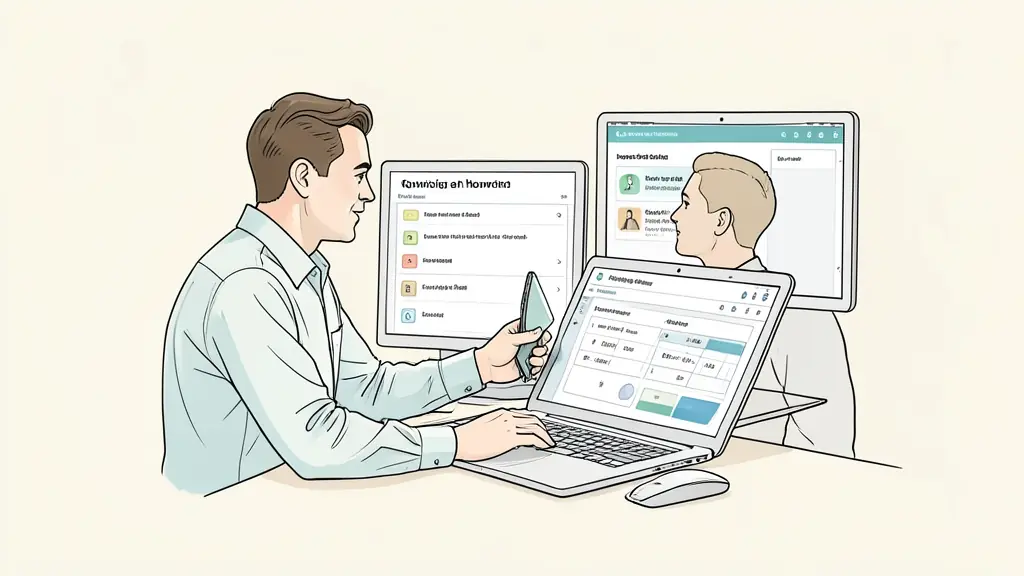
Days 46-90: Scale Jobs and Gross Profit, Not Form Fills
By day 46, stop asking which channel generated the most leads. Ask which source produced qualified appointments, sold work, and gross profit at an acceptable acquisition cost.
Build a source-level scorecard with consistent definitions:
- Lead volume
- Qualified-lead rate
- Booked inspections
- Show rate
- Closing ratio
- Sold revenue
- Gross profit
- Cost Per Lead (CPL)
- Cost per qualified appointment
- Customer Acquisition Cost (CAC)
Use the same reporting window and attribution rules across channels. If a lead first arrived through paid search but returned after reading reviews, decide in advance how that sale will be attributed. Inconsistent attribution can make a weak source look strong or punish a channel that assists conversion.
Use formulas that expose economics
- Qualified-lead rate = qualified leads ÷ total leads
- Booking rate = booked inspections ÷ qualified leads
- Show rate = completed inspections ÷ booked inspections
- Closing ratio = sold jobs ÷ completed sales opportunities
- Cost Per Lead = channel spend ÷ total leads
- Cost per qualified appointment = channel spend ÷ qualified appointments
- Customer Acquisition Cost = channel spend ÷ acquired customers
- Gross profit = sold revenue minus direct job costs
- Gross profit return on acquisition spend = gross profit attributed to the source ÷ channel spend
Your roofing customer acquisition cost matters more than a low CPL. A source can produce inexpensive inquiries while consuming office time, estimator capacity, and follow-up labor without producing profitable jobs. Another source may have a higher CPL but deliver better qualification, stronger show rates, and larger gross profit.
Compare channels by sales potential as well as price. This breakdown of roofing lead sources ranked by closing potential can help structure that comparison without assuming one source wins in every market.
Apply the keep, fix, or cut rule
Keep a source when it produces qualified appointments, closes at a sustainable rate, and generates enough gross profit to justify its CAC. Increase budget gradually so you can see whether lead quality holds as volume rises.
Fix a source when demand is present but one stage is failing:
- Low qualified-lead rate: Tighten targeting, messaging, geography, or vendor criteria.
- Low booking rate: Improve intake, response speed, and appointment offers.
- Low show rate: Strengthen confirmation and reminder workflows.
- Low closing ratio: Audit inspection quality, sales presentation, financing conversations, follow-up, and rep performance.
- Acceptable sales with weak gross profit: Review pricing, scope control, material choices, labor assumptions, and discounting.
- Rising CAC: Check competition, campaign waste, lead handling, and capacity before adding budget.
Cut a source when it repeatedly fails the qualification and profitability gates after a controlled repair attempt. Do not keep it because the dashboard reports a large lead count, and do not cut it solely because its CPL looks high.
The final budget-allocation rule is direct: keep channels that produce qualified appointments, an acceptable CAC, a workable closing ratio, and healthy gross profit. Fix channels with a clearly identifiable pipeline failure. Cut channels that cannot pass those gates. Raw lead volume does not earn more budget.
Envie d'aller plus loin ?
Laisse ton email, on te prévient dès qu'un nouvel article sort.