Automated Branding: How to Scale Your Visual Identity Without Losing Control
Stop being the bottleneck. Discover how automated branding systems keep your roofing company's image consistent across every channel, automatically.

Automated branding is the strategic implementation of software and systems to manage, distribute, and enforce your company’s visual and verbal identity without manual oversight. It transforms your brand from a set of static files into a living system that ensures every piece of content produced is consistent, professional, and aligned with your business goals.
No time to read?
- Automated branding replaces manual asset reviews with system-driven governance.
- Centralized DAM (Digital Asset Management) is the foundation for all automation.
- Locked templates allow teams to create on-brand content without needing a designer.
- The primary goal is to remove the business owner as the creative bottleneck.
What is Automated Branding?
At its core, automated branding is the shift from « policing » your assets to « systematizing » them. In a manual environment, the business owner or a marketing manager acts as a bottleneck, reviewing every single flyer, social media post, and proposal to ensure the logo isn’t stretched and the colors are correct. This is a reactive model that fails the moment you scale.
By integrating brand automation software, you move toward a proactive model. Instead of checking work after it is done, you build the constraints into the tools your team uses. This means your brand identity, messaging, and standards are baked into the software, allowing for the rapid generation of on-brand content without requiring a creative director to sign off on every minor edit. It is the difference between giving a sales rep a folder of logos and giving them a system that only allows them to create approved layouts.
The Scalability Wall: Why Manual Branding Fails
Most roofing companies hit a growth ceiling not because they lack leads, but because their internal operations cannot keep up with their external growth. When you move from one crew to five, or from a local neighborhood to multiple cities, the « manual » way of handling your image collapses.
The operational pain points are immediate:
* Channel Proliferation: Managing Facebook, Instagram, Google Business Profiles, and physical yard signs manually leads to fragmented messaging.
* The Review Bottleneck: When every piece of marketing must pass through the owner, campaigns are delayed, and sales reps stop producing content because the approval process is too slow.
* Brand Drift: New hires often « wing it, » using old logos, outdated pricing sheets, or off-brand colors, which erodes the professional image you have built.
* Asset Chaos: Searching through endless folders and email threads for the « final_final_v2.jpg » logo wastes billable hours.
Implementing Digital Asset Management for contractors solves these frictions by creating a single source of truth. Without it, you aren’t scaling a brand; you are scaling a series of inconsistent guesses.
The Mechanics of Brand Automation
To achieve brand consistency at scale, you need a technical architecture that removes human error from the equation. This is achieved through three primary layers:
Digital Asset Management (DAM)
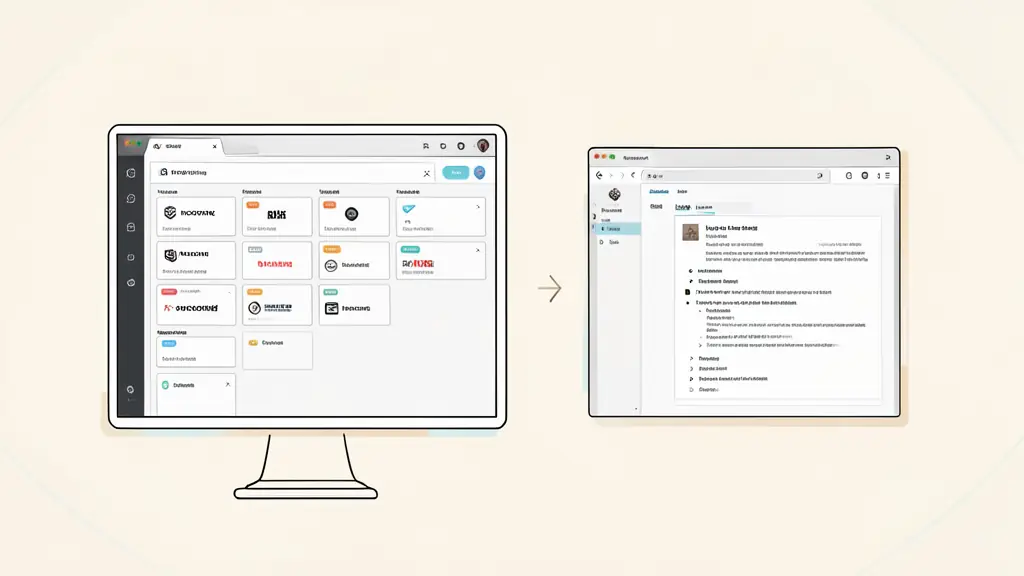
The DAM serves as the system of record. Unlike a basic cloud folder, a DAM uses asset enrichment and machine learning to tag and organize content. Whether it is a high-res photo of a slate roof installation or a specific brand icon, the DAM ensures that the most current, approved version is the only one available for use.
Locked Templates and Self-Service
The real power of automation lies in self-service distribution. By using brand templates with « locked » elements (fonts, colors, logo placement), you empower your field staff to create their own materials. They can swap a photo or update a headline, but they cannot change the Brand DNA. This removes the need for constant manual review.
AI-Driven Governance
Modern stacks utilize configurable AI agents to handle asset transformation. These tools can automatically resize a single image for five different social platforms or ensure that brand guidelines are being met in real-time. This layer of brand governance ensures that as the volume of content grows, the quality remains static.
Productivity Gains for Marketing and Ops Teams
When you stop treating your brand as a creative project and start treating it as an operational system, the ROI shows up in your time and your closing ratio.
The primary advantage is the elimination of friction. When sales and ops teams have a self-service portal for on-brand materials, they stop bothering the marketing lead with « Where is the latest PDF? » and start spending more time closing high-ticket replacements.
Key productivity wins include:
* Accelerated Time-to-Market: Launching a storm-chasing campaign across multiple regions in minutes rather than days.
* 100% Compliance: Ensuring every crew member’s vehicle wrap, shirt, and job-site sign adheres to the same brand standards.
* Reduced Creative Burnout: Your designers focus on high-level Brand Story development instead of repetitive resizing tasks.
It is critical to understand the nuance of marketing automation vs brand management. While marketing automation focuses on the delivery of the message (emails, SMS, lead nurturing), brand management focuses on the integrity of the message. One drives the lead into the funnel; the other ensures that when the lead looks at your company, they see a professional, trustworthy operation.
Comparing the Tech Stack: DAM vs. Brand Management vs. Marketing Automation
To avoid wasting capital on the wrong software, you must distinguish between these three layers of your martech stack.
| Feature | Digital Asset Management (DAM) | Brand Management Software | Marketing Automation |
|---|---|---|---|
| Primary Goal | Storage & Retrieval | Consistency & Governance | Lead Conversion & Nurturing |
| Core Function | System of record for files | Template & Guideline control | Workflow & Triggered messaging |
| Key Output | Organized asset libraries | On-brand content | Email sequences, Ad campaigns |
| User Focus | Creative teams, Ops | Sales reps, Partners, Agency | Marketing managers, CRM admins |
| Failure Point | « I can’t find the file » | « The logo is the wrong color » | « The lead didn’t get the email » |
Implementation Roadmap: Moving from Chaos to Consistency
Scaling your visual identity requires a sequential approach. If you jump straight to AI tools without auditing your assets, you simply automate the chaos.
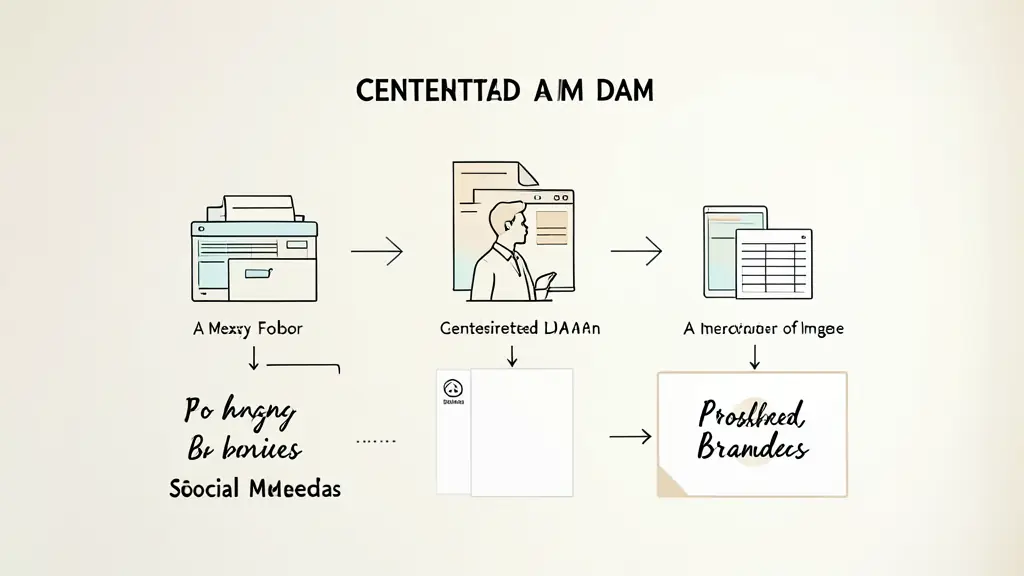
- The Asset Audit: Catalog every logo, font, color code, and image currently in use. Identify the « Brand DNA » and purge outdated versions to prevent confusion.
- Centralization: Move all approved assets into a DAM. Establish a naming convention and tagging system so any team member can find a « Completed Roof Project » photo in seconds.
- Template Creation: Develop a set of locked templates for your most common needs (proposals, social posts, flyers). These should be designed so that non-creatives can produce professional results.
- Governance Workflow: Define who can approve new assets and how they are distributed. If you are overwhelmed by the technical setup, hiring a marketing automation specialist can help bridge the gap between your vision and the software execution.
- Self-Service Rollout: Train your sales and field teams on the new system. Shift the culture from « asking for permission » to « using the approved system. »
When to Avoid Automation
Automation is a tool for efficiency, not a replacement for authenticity. There are specific areas where you must keep a human hand on the wheel to avoid the « corporate trap. »
If your brand’s primary value proposition is being a « local, gritty, family-owned business, » over-automating your visual identity can be a liability. When every post looks like it came from a national franchise, you lose the personal connection that wins local roofing contracts.
High-level creative strategy, the evolution of your brand story, and genuine customer interaction cannot be automated. Use systems to handle the repetitive tasks (resizing, organizing, distributing), but keep your unique, human voice at the center of your messaging. The goal is to look professional, not robotic.
FAQ
Who should own brand automation inside a company?
Typically, the Marketing Director or Brand Manager owns the strategy, but the Operations Manager ensures the workflows integrate with the sales team’s daily habits.
How do templates support on-brand creation?
Templates provide pre-approved layouts, colors, and fonts. Users can only change specific elements (like a photo or a headline), ensuring the final output never deviates from the brand guidelines.
When does manual review become a bottleneck?
When the owner or a single manager must approve every social post, flyer, or ad. Once you hit 3+ channels or multiple sales reps, manual review kills speed and ROI.
Envie d'aller plus loin ?
Laisse ton email, on te prévient dès qu'un nouvel article sort.